Thursday, August 19, 2010
Top 5 low-sugar fruits
Raspberries
Raspberries are an excellent source of fiber, offering 30 percent of the recommended daily value in a single serving, says Young. They also provide a rich dose of vitamin C (50 percent DV), and rank near the top of all fruits for antioxidant content. Try our seasonal Raspberry, Apple, and Frisee Salad, pictured above.
Blackberries
Blackberries also contain terrific amounts of vitamin C and other antioxidants, as well as abundant fiber, vitamin K, folic acid, and omega-3 and omega-6 fatty acids, says Young. A unique way to get blackberries (other than straight out of the carton): Pan-Seared Tilapia with Blackberry Sauce.
Kiwifruit
Kiwi, along with fiber, contains lots of vitamin C and vitamin K, plus -- surprise -- just slightly less potassium than a banana. "Potassium is one of those nutrients that’s absolutely essential for heart health, yet many people don’t get nearly enough," says Young. One healthy and delicious combo: Kiwi and Carambola Tart (if you can't find carambola, aka star fruit, use pineapple).
Strawberries
Strawberries are a dieter's best friend: low in calories, high in fiber. (Seeing a berry theme here? That's right: All berries are loaded with fiber and nutrients, making them one of the best possible fruit picks. Just be sure to choose organic strawberries; berries appear prominently on the "Dirty Dozen" list of highest pesticide residues.) "Strawberries are also an excellent source of vitamin C and flavonoids, promoting lots of antioxidant activity in the body," says Young. Here's a seasonal favorite for adults and kids alike: Easy Strawberry Tart with Oat-Cinnamon Crust.
Oranges
Oranges are an excellent source of vitamin A and the highest amount of vitamin C for any citrus; they also provide powerful antioxidants and, of course, fiber (when you eat the pulp), says Young. Interestingly, "the white pith of the orange also contains flavonoids, and some doctors are even using extracts from the pith to help fight certain types of cancer," says Young. One of our favorite ways to include pith in cooking: this sophisticated but easy recipe for Olive Oil Cake with Citrus Compote.
Labels: Arctium lappa fruit extract, healthy eating, healthy snacks, low sugar


Wednesday, July 01, 2009
Know Your Probiotics
 Probiotic strains differ in many ways:
Acid and bile resistance
Many probiotics are not able to survive the acid in the stomach and bile in the small intestine to reach the desired location in the gut (in some cases, fewer than 25% can make it through) – look for acid and bile resistant probiotics.
Colonizers vs. transients
Many probiotics are not able to colonize in the gut, they provide health benefits only on their way through the gut. Colonizers multiply and continue to provide benefits when they reach their destination. This is one of the reasons that some probiotics start with very large numbers of bacteria (often less than 25% even make it to the gut) and then the benefits are very transient. Colonizers can multiply from 100 to 200-fold so 5 billion will become 500 billion or more.
Production of enzymes
Some probiotics are able to produce enzymes that aid in digestion – proteases, lipases, amylases, cellulase and lactase. Natural production of digestive enzymes declines with age so it helps to have the microflora produce additional enzymes.
Production of vitamins
Some probiotics are able to produce vitamins to help the user meet nutritional needs. This is particularly important with vitamin B12 since we lose the ability to absorb B12 as we age.
Production of natural antibiotics
Some probiotics can produce other helpful substances like bacteriocins that reduce numbers of harmful bacteria (one example is acidophilin produced by Lactobacillus acidophilus DDS-1). Certain strains (like DDS-1) can produce hydrogen peroxide that helps to reduce Candida albicans (responsible for yeast overgrowth).
Labels: bacteria, digestion, digestive enzymes, healthy eating, Holistic Health, nutritional information, Probiotics, vitamin B12
Wednesday, June 24, 2009
Do You Want To Know What Chemicals You Are Eating??
 A new website from the Pesticide Action Network called What's On My Food shows you the side dish of chemicals you eat with each serving of food (WARNING: you will be AMAZED and HORRIFIED!). Using data from the USDA and EPA, the just-launched site lists the pesticides found on everything from almonds to watermelon.
So, you thought you were being "good" by eating oatmeal for breakfast? Well, you also inadvertently ate six different types of pesticides!
Serving broccoli with dinner? That's not all you're getting - add a sauce of 40 pesticides--five of them are known carcinogens and 19 are hormone disrupters.
You'll also see side-by-side comparisons between organic and conventional versions of each food. (Surprise: Even organic produce collects pesticides from the air.) Researchers still haven't determined a "safe" level of pesticides, but many experts think that reducing exposure is a smart move.
SOURCE
Labels: almonds, broccoli, chemicals, fruits and veggies, healthy eating, organic food, pesticides, produce, toxins
Monday, June 15, 2009
Do You Eat Meat? Opt for Leaner Cuts (Grass-Fed, Of-Course!).
 Beef can be a great source of lean protein as well as iron, zinc, and B vitamins. But you do need to choose the right cut of meat. When at the meat counter, look for top sirloin, eye of round, or bottom round cuts since these pieces of beef generally contain less than three grams of saturated fat and are under 200 calories/3-ounce serving. Pay attention to the grade of the beef as well. The label prime is not as lean as select or choice grades of beef. If you keep your portion to three ounces, studies have found that you won't raise your cholesterol levels. Once again, moderation is key to healthy living. Opt for grass fed and finished beef if you can find it — it is higher in omega-3 fatty acids.
Thanks FitSugar!
Labels: b-vitamins, beef, cholesterol, cuts of meat, eating healthy, healthy eating, lean protein, protein, red meat, zinc
Friday, June 12, 2009
Simple White Carbs ARE Harmful
 Eating a diet rich in carbohydrates that boost blood sugar levels -- foods such as cornflakes or white bread -- may hamper the functioning of your blood vessels and raise your risk of developing cardiovascular disease, a new study suggests.
Researchers from Israel's Chaim Sheba Medical Center and elsewhere evaluated 56 healthy but overweight or obese men and women, aged 35 to 60. None had diabetes or a history of hospitalizations for cardiovascular disease.
The researchers fed the men and women on four different mornings, following overnight fasts. They were served either glucose, cornflakes, high-fiber cereal or water, in descending order of glycemic index.
Low-glycemic index foods include oatmeal, most fruits and vegetables, legumes and nuts. White bread, cornflakes and instant potatoes are high-glycemic indexes. The higher the glycemic index, the more that food raises blood sugar levels.
Before and after the meals or the water, the team of researchers measured the functioning of the endothelium, the layer of cells that line the inside of blood vessels. If the endothelial function is poor, it is thought to increase the risk of cardiovascular disease.
The measurement used is called brachial artery flow-mediated dilation (FMD), which measures how well the endothelium is functioning. Researchers also measured the participants' blood sugar levels.
The blood sugar levels before and two hours after the meals were similar, but they were higher at 30 to 90 minutes after the high-glycemic meals.
The FMD was reduced two hours after eating for all groups, but the reduction was more marked after the high-glycemic meals.
The high-glycemic meals, the authors conclude, appeared to impair the endothelial function.
"Based on our study, we do urge consumers to have low-glycemic index carbohydrates instead of high-glycemic carbohydrates for better health and less potential hazards for the vascular endothelial function," said Dr. Michael Shechter, senior cardiologist at The Sackler Faculty of Medicine at Tel Aviv University in Israel.
"The main take-home message is that high-glycemic index carbs are dangerous since they reduce or inhibit endothelial function, which is the 'risk of the risk factors,' leading to atherosclerosis and potentially leading to heart disease," Shechter said.
Full article....
Labels: carbohydrates, complex carbs, diet, glycemic index, healthy eating, white flour
Friday, March 20, 2009
Benefits of Eating Foods With a Low GI Rating
 Some issues are black and white with carbs being a case in point. There are good carbs and bad carbs. Carbs low on the glycemic index (GI) are good and conversely those high on the scale aren't. High GI foods have been linked to a variety of problems, from acne to Alzheimer's as well as increasing your risk of type 2 diabetes.
New research shows that foods low on the glycemic index release a hormone in your gut to make you feel satiated, helping you avoid overeating. A rating of 50 or under on the index indicates a low GI food and a rating above 70 puts a food in the bad column. For instance, three ounces of soy beans rate 18 on the GI, but one ounce of a French baguette is 95. So choose foods with a low GI rating, like whole grain bread, which has a rating of 40 instead of white bread, which is rated 70.
Thanks FitSugar!
Labels: carbohydrates, diet, food, glycemic index, glycemic load, healthy eating, low carb
Wednesday, February 18, 2009
Try Something Different - Various Veggie Juices
 Your stomach's doing flips: Sauerkraut. Surprise--fermented cabbage is a probiotic! That's why sauerkraut juice is rich in healthy bacteria and enzymes that regulate digestion.
 You're craving more: Celery. Besides being a nourishing hydrator, celery juice is known for its ability to curb cravings. Add a drop of honey to your glass when you're jonesing for sweets.
Your heart needs mending: Beets. When it comes to matters of the heart, studies have shown that a beeting will do you good; the juice from these veggies fights disease with root force.
You want to feel younger: Purple carrot Thanks to its anthocyanins (powerful antioxidants), purple carrot juice has a unique weapon in fighting age-related diseases.
PS--If you're feeling "backed up," look out here for the debut of raw potato juice, thought to give digestive...err, relief.
Labels: anthocyanins, beverages, cabbage, celery juice, fermented, healthy eating, juicing, vegetables
Monday, January 12, 2009
Veggie of the Day ---> Winter Squash
 Did you know that one cup of winter squash provides 146% of your daily value of vitamin A and is rich in beta carotene, the pre-cursor to vitamin A? Beta-carotene is one of the carotenoids found in winter squash that provides it with its deep orange color and has been shown to have powerful antioxidant and anti-inflammatory properties.
Antioxidants help prevent the progression of atherosclerosis by inhibiting the oxidation of cholesterol in the body. Since it is only the oxidized form of cholesterol that builds up in the blood vessel walls, these antioxidants help protect against both heart attack and stroke. The anti-inflammatory properties of winter squash may help reduce the severity of conditions such as asthma, osteoarthritis and rheumatoid arthritis, which all involve inflammation. And that's not all. The carotenoids found in winter squash protect against diabetic heart disease and may be beneficial to blood sugar regulation for those suffering from diabetes. Research suggests carotenoids may be inversely associated with insulin resistance and high blood sugar levels.
Read More ...
Labels: acorn squash, anti-inflammatory, antioxidant, butternut squash, healthy eating, in season, vegetable, winter squash
Wednesday, November 19, 2008
The great skin diet - Eat Healthy, Look Healthy
 Sun protection
What to eat: sunflower seeds and almonds
These seeds and nuts are loaded with vitamin E. Collectively, antioxidants act like an army, protecting skin from UV-spawned free radicals. But E is on the front lines; skin’s top layers contain high levels that guard cells’ outer membrane so cells stay healthy. Plus, strong membranes hold water in, keeping skin hydrated. Aim for 2 tablespoons hulled seeds or 23 almonds daily.
A fresh complexion
What to eat: dark orange, leafy green and red veggies
Squash, sweet potatoes and spinach are full of the antioxidant beta-carotene. Your body converts it to vitamin A, which regulates cell production and turnover so skin’s surface is smooth, says Valori Treloar, M.D., co-author of "The Clear Skin Diet." Carotenoids may also decrease skin’s sensitivity to sun. Aim for three 1-cup servings a day.
A youthful glow
What to eat: fortified cereal, lean meat, pork, poultry, oysters
You’ll get zinc and iron, minerals key to skin functioning. Zinc contributes to cell production, plus natural cell sloughing, which keeps dullness at bay. Red blood cells need iron to carry oxygen to skin, helping give you a glow, says David Bank, M.D., a dermatologist. Aim for 1 serving of cereal (a cup), 1 palm-sized serving of meat or poultry or 3 oysters per day.
Dewy skin
What to drink: water
Skin cells contain mostly water, and if you’re dehydrated, skin will look and feel parched, too. But you needn’t chug 8 cups a day; researchers found no studies to back up the recommendation. Simply ward off dehydration — and dryness — by drinking when you’re thirsty.
Fewer wrinkles
What to eat: wild salmon, Atlantic mackerel, walnuts
These fish and nuts, plus fortified eggs, are bursting with omega-3 fatty acids, which fight inflammation in the body caused by sun and stress. "Inflammation produces free radicals, and free radicals contribute to aging by attacking collagen," says Susan Taylor, M.D.
One study did find that older people who consumed more fish and veggies over their life had fewer wrinkles than those who ate more meat, the Journal of the American College of Nutrition reports. The research didn’t focus solely on fish, however; vegetables' antioxidants, for example, may have been a factor. Aim for two 5-ounce servings of fish per week; on other days, 1 oz of walnuts or 2 omega-3 eggs.
Clearer skin
What to eat: whole wheat and grains
In the past, dermatologists have maintained that unless you wipe greasy fingers on your face, food doesn’t cause zits. But some are rethinking the party line: Australian researchers found that a low-glycemic diet (more whole grains, protein and produce versus refined carbs such as white bread) may reduce acne.
One explanation: Low-glycemic foods keep insulin steady, and refined carbs and sugar spike it. The surges may boost production of androgens, hormones that when elevated can cause zits. After 12 weeks of a low-glycemic diet, subjects’ pimple counts dropped 20%, The American Journal of Clinical Nutrition notes.
Aim for 3 servings a day (one serving equals a slice of bread or 1/2 cup cooked grains.)
Smooth texture
What to eat: strawberries, citrus fruits, red peppers, broccoli
Vitamin C, plentiful in this produce, is vital for the production and formation of collagen, skin’s support structure, says Toby Amidor, R.D., director of nutrition for DietTV.com. And a strong support layer helps smooth what’s on top and prevent wrinkles, she says. Aim for two 1-cup servings of fruit and 1 cup of red peppers and/or broccoli a day.
Source
Labels: best foods, David Zinczenko, eating for good skin, healthy eating, iron, Omega-3s, skin care, Vitamins, Whole grains
Thursday, September 18, 2008
Eat This, Not That
 What To Eat When…
 You’re Stressed
Modern life is a big, boiling cauldron of anxiety stew, and we get a heaping helping every day. Whether you’re talking to your boss about a promotion, talking to your spouse about the credit cards bills, or talking to your kids about a streak of bad behavior, there’s always a stress-soaked moment around the corner. So calm yourself quick with these natural nerve-settlers.
Eat This:
1 cup of low-fat yogurt; 2 tbsp of nuts
Scientists in Slovakia gave people 3 grams each of two amino acids—lysine and arginine—or a placebo and asked them to deliver a speech. Blood measurements of stress hormones revealed that the amino acid—fortified guys were half as anxious during and after the speech as those who took the placebo. Yogurt is one of the best food sources of lysine and nuts pack tons of arginine.
Red Bell Peppers
Researchers at the University of Alabama fed rats 200 milligrams of vitamin C twice a day and found that it nearly stopped the secretion of stress hormones. Add half a sliced red bell pepper to a salad or sandwich; calorie for calorie, no single food gives you more vitamin C.
A Cup of Peppermint Tea
The scent of peppermint helps you focus and boosts performance, according to researchers. In another study, they found that peppermint makes drivers more alert and less anxious.
A Handful of Sesame Seeds
Stress Hormones can deplete your body’s supply of magnesium, reducing your abilities and increasing your risk of developing high blood pressure. Sesame seeds are packed with this essential mineral.
Not That!
A Can of Soda
A study from the American Journal of Public Health found that people who drink 2 ½ cans of soda daily are three time more likely to be depressed and anxious, compared with those who drink fewer.
You’re Sad
Watch enough TV advertising and you begin to think the only answer to a bad mood is a bottle of pills. Wrong! Your next meal can have as dramatic an impact on your mood as your next prescription refill. So the next time you have a gnawing feeling that something’s amiss, try gnawing on one of these.
Eat This:
An arugula or spinach salad
Leafy greens—arugula, chard, spinach—are rich sources of B vitamins, which are part of the assembly line that manufactures feel-good hormones such as serotonin, dopamine and norepinephrine. In fact, according to a study published in the Journal of Neuroscience Nursing, a lack of B6 can cause nervousness, irritability and even depression.
Tuna Sashimi or Grilled Salmon
A study in Finland found that people who eat more fish are 31% less likely to suffer from depression. And skip sweet, simple carbs (like the rice with you sushi)—the inevitable sugar crash can deepen depression.
1 tbsp of Ground Flaxseed Daily
Flax is the best source of alpha-linoleic acid, or ALA—a healthy fat that improves the working of the cerebral cortex, the area of the brain that processes sensory information, including that of pleasure. To meet your quota, sprinkle it on salads or mix it into a smoothie or shake.
Not That!
White Chocolate
White chocolate isn’t technically chocolate, since it contains no cocoa solids. That means it also lacks the ability to stimulate the euphoria-inducing chemicals that real chocolate does, especially serotonin. If you’re going to grab some chocolate, darker is better; more cacao means more happy chemicals and less sugar, which will eventually pull you down.
Excerpted from Eat This, Not That by David Zinczenko and Matt Goulding. Rodale Books, 2007.
Labels: David Zinczenko, Eat This, eating healthy, food and mood, healthy eating, men's health, new book, Not That
Wednesday, July 30, 2008
How does honeydew compare to cantaloupe?
 Cantaloupe and honeydew share similar nutritional profiles, except for two main differences-vitamin C and beta-carotene.
Cantaloupe contains about twice the amount of vitamin C as does honeydew (37 milligrams for 100 gram serving versus 18 milligrams) and about 67 times the amount of beta-carotene (2020 micrograms for 100 gram serving versus 30 micrograms).
So if we were looking for a source of this important nutrient, we would look to cantaloupe rather than honeydew as it contains minimal amounts of beta-carotene. While cantaloupe may contain more of these two nutrients, honeydew melons are delicious and we encourage you to enjoy them, along with other melons, as part of your Healthiest Way of Eating.
Labels: canteloupe, citrus fruits, healthy eating, honeydew, Vitamin C
Monday, July 07, 2008
Does cold smoked salmon have the same nutrient value as fresh or frozen salmon?
 No, smoked salmon does not have the same nutrient value as fresh or frozen salmon. Smoked salmon is less healthy than cooked salmon for several reasons.
 Perhaps the most important reason involves omega-3 fatty acids. Salmon is one of the richest sources of omega-3 essential fatty acids, which have been associated with the reduction of inflammation and protection against many different types of degenerative diseases. Smoking salmon has been found to substantially reduce its omega-3 content. For example, 3 ounces of baked Chinook salmon contain about 1.75 grams of omega-3 fatty acids. This same 3-ounce portion of Chinook salmon, when smoked, contains less than 1/2 gram of omega-3s.
Another reason that cooked salmon is preferable is because smoking of foods can create toxic substances in the foods called polycyclic aromatic hydrocarbons (PAHs). Many of these compounds have been shown to increase risk of cancer. When wood or coal is used for smoking, the hotter the wood or coal burns, the more PAHs are created.
Most of the other nutritional changes that occur during the smoking process are not particular to smoking, but involve exposure to heat and air over a fixed period of time. In other words, the quantity of vitamins, minerals, proteins, carbohydrates and fats in smoked and broiled meats/fish are fairly similar, with cooking of any kind resulting in loss of certain nutrients, and prolonged cooking resulting in the loss of more nutrients than short-term cooking.
In the case of lox, which is very lightly smoked, nitrates are often added as a preservative. Smoking fish has been a traditional way to preserve fish for many different cultures. Fish that is smoked for longer periods of time are less likely to require the addition of preservatives to extend their shelf life; however, they may have a higher PAH content.
Many factors would be important in determining whether to include or avoid smoked salmon in their Healthiest Way of Eating. Most individuals in a relatively good state of health with fully nourishing diets would be able to include smoked salmon and benefit from its consumption. These individuals would have plenty of additional omega-3 food sources in their weekly meal plan, and they would also have healthy detoxification systems that could readily process and eliminate the PAHs or preservatives found in the smoked fish.
As we emphasize throughout our website, wild-caught (versus farmed) fish are always best for optimizing nourishment, and your salmon-whether smoked or non-smoked-would be best purchased in the wild-caught versus farmed variety.
Labels: healthy eating, lox, Omega-3s, salmon, smoked salmon
Monday, May 05, 2008
What Is Millet?
 Refined carbs are linked to so many unhealthy things, like obesity, acne, and even throat cancer, so avoiding them is certainly part of a healthy lifestyle. If you are trying to eat more whole grains like rice, oats, and barley, have you ever considered millet? Yes, it is the main ingredient in bird food, but it's great for people, too.
If you've never tried millet, here are some reasons to give it a shot.
Millet isn't actually a whole grain, it's a seed, which means it's gluten free. It's also a great source of protein. Half a cup of cooked millet has 5.5 grams of protein. That's more than long-grain brown rice, which has 2.5 grams.
It can lower high blood pressure and reduce your risk of heart attack because it's a great source of magnesium. This mineral can also help reduce the severity of asthma and migraines. One cup of cooked millet has 26 percent of your RDI of magnesium.
When cooked, it has a texture similar to couscous or rice. Adding extra liquid and cooking it a bit longer, gives the millet a creamier texture similar to polenta. Since it has a bland, slightly nutty taste, you can flavor with all types of herb and spices. You can add it to cooked cereals, casseroles, soups, and side dishes.
It's a great source of insoluble fiber, containing 4.3 grams per half cup. Not only is it great to get at least 30 grams of fiber for overall health and to prevent certain types of cancers, like breast, but it may also help to prevent gallstones.
It's rich in B vitamins, especially niacin (B3), which is linked to lowering cholesterol.
SOURCE
Labels: healthy diet, healthy eating, millet, Whole grains
Wednesday, April 02, 2008
USDA Ranking of Foods by Antioxidant Capacity
 The largest USDA study of food antioxidants reveals common beans are among the best sources. Researchers with the USDA analyzed antioxidant levels in over 100 different foods. Base upon the results, the USDA has provided a list of the top 20 ranking of foods by antioxidant capacity.
 USDA Ranking of Foods by Antioxidant Capacity
1 Small Red Bean (dried) Half cup: 13727
2 Wild blueberry 1 cup: 13427
3 Red kidney bean (dried) Half cup: 13259
4 Pinto bean Half cup: 11864
5 Blueberry (cultivated) 1 cup: 9019
6 Cranberry 1 cup (whole): 8983
7 Artichoke (cooked) 1 cup (hearts): 7904
8 Blackberry 1 cup: 7701
9 Prune Half cup: 7291
10 Raspberry 1 cup: 6058
11 Strawberry 1 cup: 5938
12 Red Delicious apple One: 5900
13 Granny Smith apple One: 5381
14 Pecan 1 ounce: 5095
15 Sweet cherry 1 cup: 4873
16 Black plum One: 4844
17 Russet potato (cooked) One: 4649
18 Black bean (dried) Half cup: 4181
19 Plum One: 4118
20 Gala apple One: 3903
Labels: Anti-oxidant, fruits and veggies, healthy diet, healthy eating, sea beans
Thursday, March 13, 2008
Superfoods to a Super You
Apples ... fight both blood clots and cancer and also help to lower cholesterol levels.
Avocados ... are high in fiber and potassium, making skin soft. They also help prevent high blood pressure, heart disease and certain cancers, especially colon cancer.
Bananas ... contain high levels of potassium, magnesium and folate, helping fight high blood pressure and reducing the risk of strokes. Folate is vital for tissue growth, and is important in combating heart disease and cancer.
Eggs ... are rich in choline, protein and arytenoids, which are thought to help retain memory and be able to prevent cataracts, as well as age-related macular degeneration.
Fennel ... is high in vitamin A, calcium, potassium and iron and helps alleviate digestive problems, while the iron and vitamin A in the plant help maintain healthy skin and nails and prevent fatigue and anemia.
Garlic ... is an excellent source of antioxidants and acts as an anti-coagulant in the blood, which reduces the risk of strokes.
Kidney beans ... are full of fiber, which helps maintain a healthy digestive system. This may help prevent colon cancer and diabetes, while also lowering blood cholesterol and blood sugar.
Red wine ... is made from purple grapes, which help destroy free radicals and in doing so help prevent cancer. They can also lower cholesterol levels in the body, and reduce the growth of skin melanomas.
Salmon ... Oily fish such as salmon contains omega-3 fats that reduce blood clotting. Salmon is a source of good quality protein, vitamins and minerals. Eating oily fish reduces the risk of heart attacks, helps prevent depression and protects against dementia.
Spinach ... is an excellent source of folic acid and vitamins A and C, fighting cancer, heart disease and mental disorders.
Walnuts ... are a true superfood, with just a handful of walnuts having as much omega-3 fatty acid as three ounces of salmon. Omega-3 fatty acid helps to dissolve blood clots and heart disease and may prevent arthritis and depression.
Labels: fruits and veggies, healthy eating, Nuts, superfoods, Vitamins
Wednesday, March 05, 2008
Fiber - Why Do We Need It?
 Dr. Oz says the positive effects of getting enough fiber will happen "almost immediately." The fiber can help move things through your system—including toxins—very quickly. And that's not all. "Bile, when it gets absorbed through the bowel, turns into cholesterol. So when you take a lot of fiber in your diet, you suck the bile out of you, and your cholesterol drops automatically. It also gets rid of sugar, which helps the diabetics. And it's a great tool if you want to lose weight because it makes you feel full."
Do you need to get more fiber in your diet? Most likely, Dr. Oz says. The average American gets just seven grams of fiber a day. But women need about 25 grams a day, and men need 35 grams a day. "That's somewhere between seven and nine helpings of fruits and vegetables," he says.
If you radically increase your intake of fiber, though, you may feel gassy. "Your intestinal tract isn't ready for it," Dr. Oz says. "The fiber in the bowel is permeated by all these bacteria, the bacteria eat the fiber, and they make gas. That's their waste product. So you've got to slowly build up when you add fiber to your diet. But at the end of the day, you're going to have some gas. But it's a good sign because you're digesting food that's good for you."
Source
Labels: digestion, Dr. Oz, fiber, healthy diet, healthy eating, Oprah
Monday, March 03, 2008
Papaya - Deliciously Healthy!

Papaya, originally uploaded by 'Annieta'.
Did you know that papayas are not only a rich source of antioxidant nutrients but the enzymes, papain and chymopapain, which help aid digestion and are also used to treat sports injuries and other causes of trauma and allergies? These enzymes, along with the vitamin C, vitamin E, and beta-carotene found in papayas, have been shown to help lower inflammation and improve healing from burns.
You have to do nothing more than cut these tropical fruits in half and remove the seeds to enjoy their delicious flavor and health benefits.
Read more....
Labels: fruit, healthy eating, healthy snacks, papain, papaya, Vitamin C
Thursday, February 28, 2008
A New Healthy Lunch Spot --> Free Foods

originally uploaded by MidtownLunch.
Work in midtown but don't know how to make a healthy lunch work for you?
Look no further than FreeFoods NYC for organic, raw and vegetarian delights (meat lovers -- they have grass-fed beef, free-range chicken and wild Alaskan fish!)
FreeFoods
18 W. 45th St.
212-302-7195
Labels: cool new place, healthy dining, healthy eating, NYC, restaurants
Friday, February 22, 2008
Brain Food


- Nuts: Nuts have omega 3 fatty acids, which research has linked with a lower risk of Alzheimer's. In addition, nuts like almonds are a great source of the antioxidant vitamin E. However, the nuts you find in the snack food section of the store can have lots of added fat, calories and salt, so be sure to read the food labels.
- Fish: Fish like salmon, cod and trout are rich in omega 3 fatty acids.
- Coffee: Several studies have found a link between coffee consumption and a reduced risk of Alzheimer's disease. The caffeine in coffee appears to have an effect on the toxic beta amyloid proteins associated with Alzheimer's disease.
- Sunflower seeds: Sunflower seeds provide an excellent source of vitamin E.
- Red wine: A study on mice found that the equivalent of one glass of red wine a day had protective effects against Alzheimer's disease, possibly due to the presence of the antioxidant resveratrol.
- Olive oil: A staple of the Mediterranean diet, olive oil contains vitamin E and antioxidants.
- Beans: Kidney beans, lima beans and other varieties are excellent sources of antioxidants and folic acid, which has been linked to lower Alzheimer's disease risk.
- Vegetables: Consumption of green leafy vegetables like spinach and cruciferous vegetables such as broccoli and Brussels sprouts could slow cognitive decline.
- Fruits: Apples and citrus fruit appear to protect the brain against oxidative stress thanks to the presence of chemical substances known as polyphenols.
Labels: brain, healthy diet, healthy eating, nutrition
Tuesday, February 12, 2008
Get Your Vitamin C, Naturally!
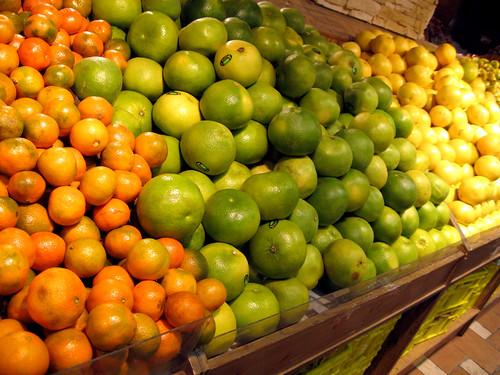
Citrus fruits are consumed not only because of their taste but also because of the beneficial effects they have on the health. There are various health benefits associated with the consumption of citrus fruits, as they are low in fat, free of cholesterol and sodium.
Citrus fruits are rich in vitamin C content, acidic content and are good sources of minerals, carbohydrates and fibers. They also contain essential nutrients like calcium, copper, folate, potassium, magnesium, niacin and vitamin B6 required for the proper functioning of the body.
Citrus fruits have several medicinal and nutritive properties, which help in treating or fighting against several diseases. Citrus fruits like lemons may help in reducing the pain caused due to bee stings. Some types of citrus fruits may help in reducing the risk of cancers and heart diseases. Orange, which is a rich source of vitamin C can prevent scurvy, caused due to vitamin C deficiency.
Labels: citrus fruits, fruit, healthy eating, Vitamin C
